
Suicide Prevention
Cast all your anxiety on him because he cares for you. – 1 Peter 5:7
If you are having suicidal thoughts or know someone who is, call or text the Suicide and Crisis Lifeline at 988.
Chat at 988lifeline.org
You will be connected with a trained counselor. This is a free service available 24/7. Your conversation is confidential unless there is imminent danger for you or others.
NOTE: We are not medical professionals, and this resource should not be considered a substitute for professional advice or treatment. It is meant to support the steps recommended by a qualified healthcare provider, not to replace or overshadow any necessary medical guidance.
5 Action Steps
Here are five preventative steps for you to help someone experiencing suicidal thoughts and/or behaviors.
- Ask: Inquire directly, “Are you thinking about suicide?” This shows you’re open to discussing it in a caring, non-judgmental way.
- Be Present: Whether it’s being physically there, chatting on the phone, or offering support in other ways, your presence matters. Listen actively to understand their thoughts and feelings.
- Ensure Safety: Take steps to limit access to potentially lethal items or locations. While it can be challenging, asking about their plans and removing dangerous means can be crucial for their safety. Keep a line of sight – this is especially important for parents with teens/kids.
- Facilitate Connections: Support them in accessing professional and community resources. Offer to help them reach out to trusted individuals like family members, friends, spiritual advisors, or mental health professionals.
- Follow Up: After providing immediate support, check in on them later to see how they’re doing and offer continued support.
Warning Signs
Many people who die by suicide show one or more of the behaviors listed below. The risk of suicide is greatest when the behaviors listed below are the result of a painful event, loss, or change.
- Talking about wanting to die or to kill themselves
- Looking for a way to kill themselves, like searching online or buying a gun
- Talking about feeling hopeless or having no reason to live
- Talking about feeling trapped or in unbearable pain
- Talking about being a burden to others
- Increasing the use of alcohol or drugs
- Acting anxious or agitated
- Sleeping too little or too much
- Withdrawing or isolating themselves
- Showing rage or talking about seeking revenge
- Extreme mood swings
- Some people might experience elevated mood – seem more relaxed or at peace as that can indicate that they have made the decision for suicide and are at peace with that decision and for some are even looking forward to it.
Risk Factors
Risk factors are characteristics that make it more likely someone will die by suicide:
- Mental health conditions, particularly mood disorders, schizophrenia, anxiety disorders, and certain personality disorders
- Alcohol and other substance use disorders
- Hopelessness
- Impulsive and/or aggressive tendencies
- History of trauma or abuse
- Major physical illnesses
- Previous suicide attempt(s)
- Family history of suicide
- Job or financial loss
- Loss of relationship(s)
- Easy access to lethal means
- Local clusters of suicide
- Lack of social support and sense of isolation
- Stigma associated with asking for help
- Lack of health care, especially mental health and substance use treatment
- Cultural and religious beliefs, such as the belief that suicide is a noble resolution of a personal dilemma
- Exposure to others who have died by suicide (in real life or via the media and internet)
- Someone who hurts themselves on purpose may or may not have the intention to die by suicide.
How can we pray for you today?
We look forward to praying for you! Our team will get back to you within three business days.
Protective Factors
Protective factors can reduce the risk of suicide:
- Strong Coping and Problem-Solving Skills
- Meaningful Reasons for Living, such as relationships with family, friends, or pets
- A Robust Sense of Cultural Identity
- Support from Partner, Family, and Friends
- Connection with Others
- Involvement in School, Community, or Social Organizations
- Access to Reliable and High-Quality Physical and Mental Health Care
- Safe Storage Practices for Firearms and Medications
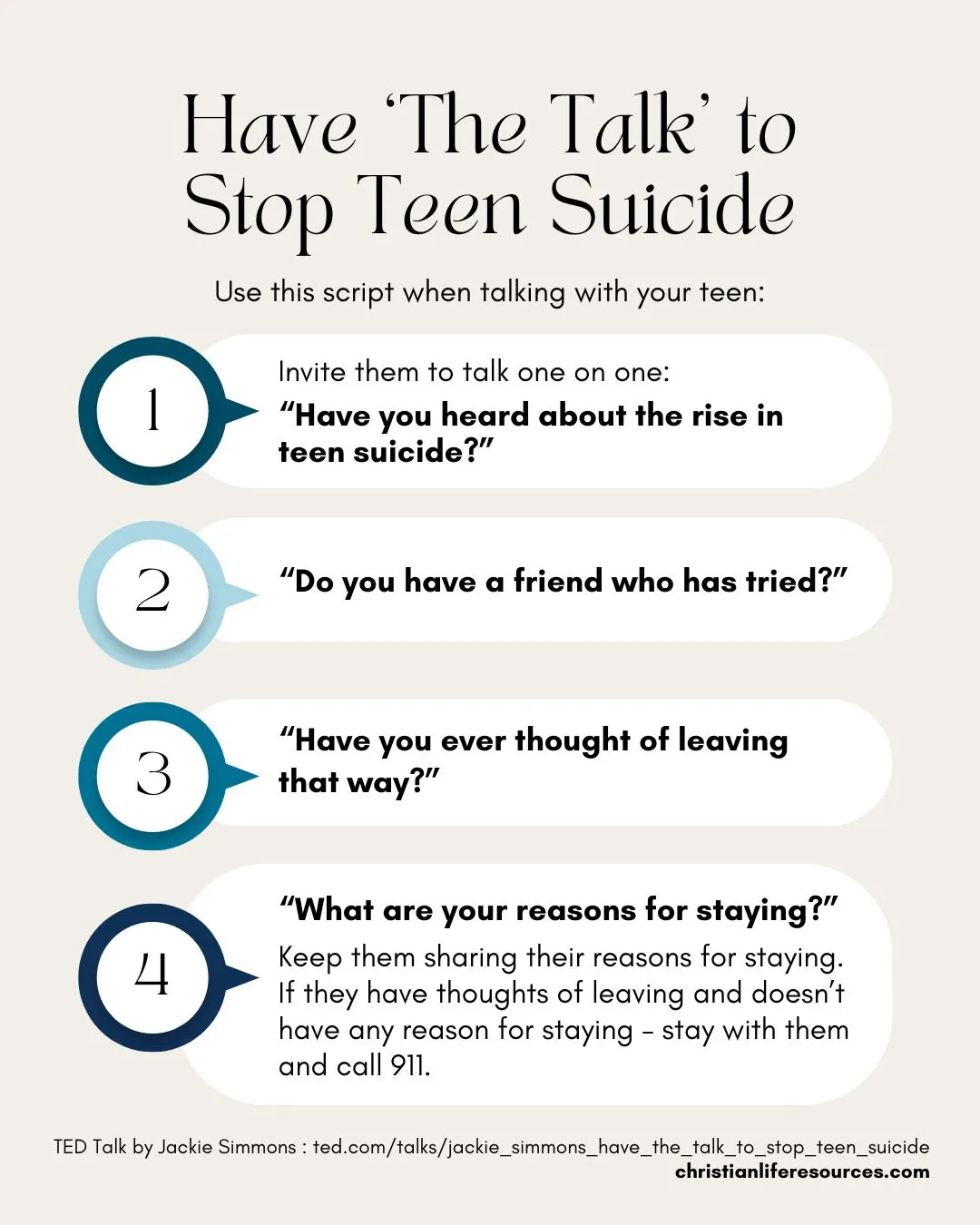
Teens and Suicide
How can I get my teen to talk with me about these issues?
Try starting with one or more of these conversation openers:
- “Tell me more about what’s happening to you. I’m here to listen.”
- “I care. I want to listen and understand. What do you want me to know about the way you feel and what’s going on?”
- “Do you ever have thoughts of harming yourself?”
Axis.org has great resources, find more here.
Suicide Prevention Help for YOU
- Seek Therapy or Support Groups: Talking to a professional can enhance your well-being. Call 211 or visit their website to explore local therapy and support group options.
- Create a Support Network: Connect with others to reduce feelings of isolation and recognize your importance within a larger community.
- Engage in Activities: Join an interest group, volunteer, take a class, or pick up a new hobby to enrich your life.
- Use Social Media: Share your feelings and connect with others who have experienced similar challenges.
- Surround Yourself with Positivity: Spend time with encouraging individuals, including family, friends, coworkers, neighbors, and spiritual advisors.
- Utilize Your Support Network: Lean on your network during tough times for encouragement and assistance.
- Express Your Emotions: Don’t hesitate to share how you’re feeling with trusted individuals.
- Stay Open-Minded: Be receptive to different perspectives and opinions from others.
- Prioritize Self-Care: Take time for activities that promote your physical and mental well-being.
- Develop a Safety Plan: Create a plan to help navigate challenging moments.
- Identify Personal Warning Signs: Note the thoughts, feelings, or situations that signal a difficult time may be approaching.
- Use Coping Strategies: List activities you can engage in to help manage urges to harm yourself.
- Socialize: Identify people and social settings that can provide distraction from stressful thoughts.
- Connect with Supportive Individuals: Make a list of family members or friends you can talk to when feeling stressed.
- Reach Out to Professionals: Compile a list of mental health professionals, agencies, and hotlines, such as the 988 Suicide & Crisis Lifeline.
- Limit Access to Lethal Means: Make your environment safer to reduce the risk of acting on suicidal thoughts.

Hope for Loved Ones When There Is a Suicide
Rev. Robert Fleischmann, National Director, Christian Life Resources Circumstance Christians are not immune to great heartbreak in this life. This seems especially so when they receive the stunning news that a friend or family member took their own life. This document...

Depression That Leads to Death
True or False? 1) Most people trying to cope with depression simply don’t have strong enough faith. FALSE. People in the church may jump to this conclusion because many depressed people push God away. They really suffer from a treatable chemical imbalance and are no...

When Life Seems to Have No Meaning
Pastor Bruce Wietzke Why did I not perish at birth, and die as I came from the womb? We know such a question is not uncommon in our world. We live among people who not only may ask such a question concerning themselves but may also cut short the life of the unborn...
God’s Word on Life
The Bible teaches that life is a gift from God, our Creator. For example, Job says to God, "Your hands shaped me and made me...Remember that you molded me...Did you not...clothe me with skin and flesh and knit me together with bones and sinews? You gave me life" (Job...
Bible Passages Regarding Suicide
Acts 17:25: “...[He) himself [God] gives everyone life and breath and everything else.” Deuteronomy 32:39: “There is no god besides me. I put to death and I bring to life...” 1 Corinthians 10:13: No temptation has overtaken you except what is common to mankind. And...
Q&A on Views Regarding Suicide
QUESTION: It seems that an increasing number of people, especially the young, see nothing wrong with suicide. What can we tell them? ANSWER: Before telling the person you’re talking to anything, try to figure out, or just ask, why this matters to him or her at this...
Suicide Warning Signs
What To Watch For: A major change in sleep or eating patterns Increased alcohol or drug use Major personality changes - becomes impulsive, rebellious or violent Violent or rebellious actions Withdrawal from family and friends Less interest in school - grades,...
Standing Between Life and Death
John C. Johnson, Ph.D. A Gospel-Law-Gospel Approach to Helping Christians Who Are Suicidal Introduction (1 Cor. 13) If I speak in the tongues of man and of angels, but have not love, I am only a resounding gong or a clanging cymbal. If I have the gift of prophecy and...
Q&A on Whether or Not a Person Who Commits Suicide Can Receive a Christian Burial
Rev. Armin Schuetze Question: Why is it we so completely condemn a Christian when he has committed suicide? Doesn’t Matthew 7:1 say: "Do not judge, or you too will be judged"? Answer: The Significance of Christian Burial What is the significance of Christian burial?...
How To Help Those Who May Contemplate Suicide
Sally Armstrong If someone confides in you that he or she is thinking of committing suicide or shows other signs of being suicidal, talk about it. Your interest may give your friend hope at a time when that is exactly what he or she needs. Here’s what to say, what NOT...
Suicide Facts and Statistics
Most recent data available from the Centers for Disease Control and the World Health Organization to compile the following list of suicide facts: General Statistics (USA) Suicide is the 10th leading cause of death in the US for all ages. (CDC) Every day, approximately...
The resources shared on this page reflect their author’s views and it is not a wholesale endorsement.
